
Municipality continues construction: 550 homes completed and more than 1,000 in preparation
The municipality is firmly committed to the housing challenge. Between 2022 and 2030, approximately 2,170 homes must be built, at least two-thirds of which must be affordable and 30% social housing. More than 550 homes, including nearly 200 in the social category, have now been completed. These include the De Jonkvrouw and Kersenhof projects. The municipal executive has thus met the targets set out in the 2022 Target Agreement. In addition, plans for approximately 350 homes are awaiting a decision by the Council of State. These relate to locations in Bleekvelden, Grote Bos, and Bezorgershof.
In preparation
In the meantime, we are working hard on preparing projects involving a total of more than 1,000 homes. These are located in various places in the center of Geldrop (Lommerrijk (near the railway station), Bleekvelden (around the Gamma store), Bezorgershof, Marktplein, and the now demolished post office) and Luchen (expansion north of Mierlo). We therefore expect to be able to start construction in Lommerrijk, Bleekvelden, and Luchen this year.
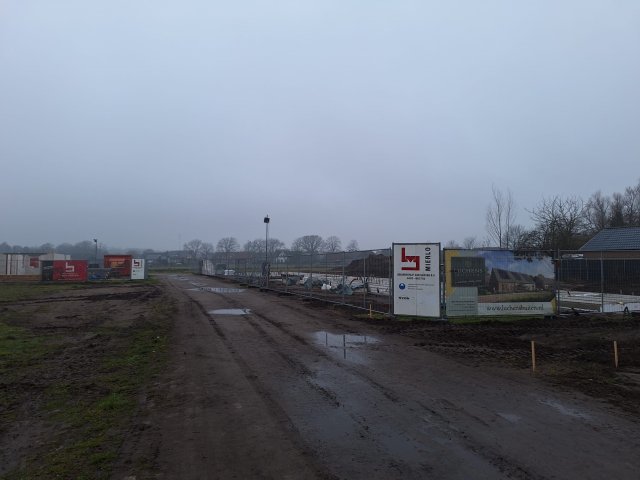
Alderman Gestel: “The housing shortage is severe and palpable. That is why we are continuing to build. We have already made significant progress, but we are not there yet. With more than a thousand homes in the pipeline, we are demonstrating that we are picking up the pace.”
Building with an eye for affordability and quality
New construction is necessary to help first-time buyers, seniors, and families find housing. At the same time, housing construction is under pressure due to rising construction costs, limited investment opportunities, lengthy procedures, and challenges in the area of electricity connections.
The focus is not only on numbers, but also on creating the right, suitable homes. Already, two-thirds of the homes in our municipality are occupied by single-person and two-person households. This proportion will only increase in the coming years. So we are mainly building homes for this target group. Not only apartments, but also ground-level homes.
Performance agreements: joint responsibility for affordable housing
On February 26, the municipality, together with housing associations (Woonbedrijf, Compaen, and Wooninc) and tenant organizations, signed new multi-year performance agreements. These agreements form the backbone of local public housing policy.
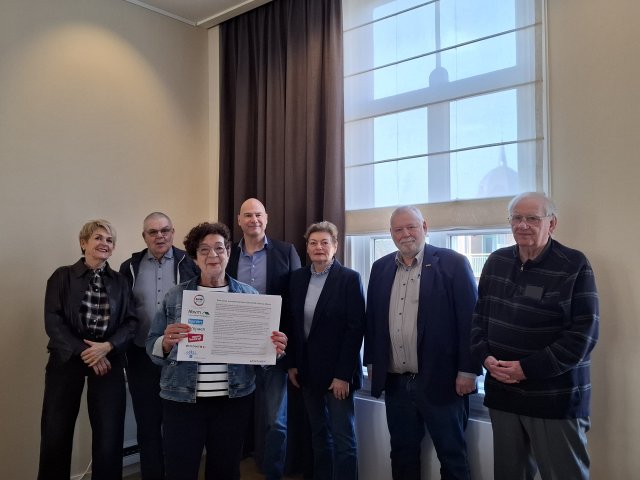
The agreements set out, among other things, how we will meet the target set out in the Regional Housing Deal, namely to build 651 social housing units between 2022 and 2030. Part of this target (192) has already been achieved, for example in the De Jonkvrouw project. Between 2026 and 2030, another 459 homes will need to be built.
This offers prospects for low and middle incomes. To enable this acceleration, the municipality will work with 'parallel planning'. This means that different steps in the construction process will be carried out simultaneously. Design, participation, and legal procedures will run concurrently, significantly reducing the lead time. The parties are also committed to WoonST 2.0, a method of construction using standard designs that allows homes to be completed more quickly.
In addition, the existing housing stock will be better utilized, for example through home sharing and adding extra floors to existing buildings. The agreements also focus on achieving a better balance in different price categories of homes per neighborhood, better identification and resolution of problems, the construction of zero-step and clustered homes in the context of housing and Health, and further steps towards an energy-neutral Geldrop-Mierlo.
Alderman Gestel:
“With the performance agreements, we are specifying how we will work together to ensure sufficient affordable, sustainable social housing and resilient neighborhoods. This is not just an agreement on paper, but a joint implementation agenda.”
The agreements are in line with the previously established guiding policy choices for housing, which focus on affordability, sustainability, quality of life, and social cohesion.
For the full press release on the performance agreements, go to: Municipality and housing associations set course for 651 new social housing units by 2030
Public housing is more than just construction
The municipality emphasizes that the housing challenge is broader than just new construction. It is expected that approximately 80% of the homes in 2040 will already be in place. That is why efforts are also being made to:
- Keeping the existing housing stock affordable.
- Making better use of housing, for example through mobility and house sharing.
- Housing for middle-income earners who are at risk of falling between the cracks
- Incentive schemes (such as starter loans, sustainability loans, and—in the long term—transfer schemes)
- Appropriate solutions for seniors in the context of housing and Health
In addition, the municipality has a legal responsibility for focus groups, including status holders, students, and trailer park residents. By focusing on distribution and balance, work is being done to create inclusive, resilient neighborhoods.
Building strong neighborhoods
Housing is directly linked to quality of life, amenities, and community spirit. That is why housing construction is always considered in conjunction with investments in public spaces and social cohesion.
Alderman Gestel: “We are building houses and communities. It's all about balance: speed and quality, growth and livability. Only in this way can we ensure that our neighborhoods remain strong and that there is room for participation and interaction.”